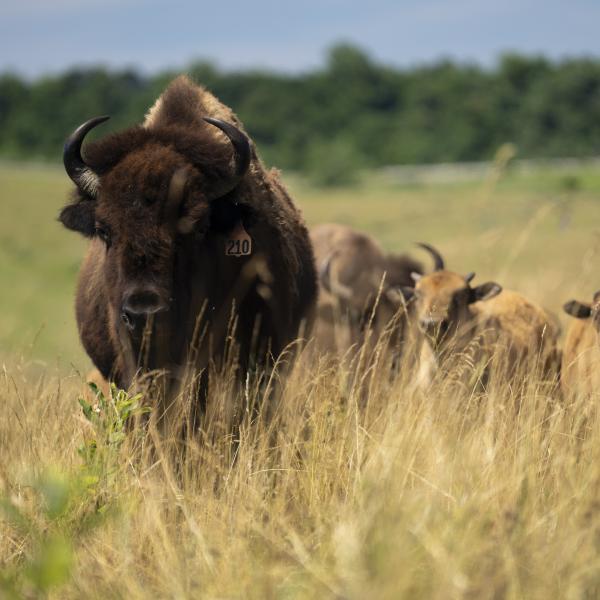
The American bison is a symbol of strength, resilience, and one of North America's greatest conservation success stories. Once roaming the continent by the millions, these remarkable animals helped shape vast prairie ecosystems that supported countless other species. Today, thanks to dedicated conservation efforts, bison are returning to native landscapes and playing an important role in restoring the grasslands they once called home.
At The Wilds, bison are part of that story. Guests can watch these iconic animals grazing across expansive pastures while learning how science, collaboration, and conservation are helping secure a future for America's National Mammal.
Read More about Bison North American Center for Bison Conservation at The Wilds
Scientific Name: Bison bison
Conservation Status: Near Threatened
Size: Height ranges between 6 - 6.8 feet, Length ranges between 9 - 11.6 feet
Weight: 770 - 2200 lbs.